Weather radar is one of the most important tools meteorologists use to track storms and issue warnings. But even the most advanced radar system is only as good as its calibration. If a radar is not properly calibrated, the data it produces can become inaccurate, leading to less reliable forecasts and weather warnings.
This challenge becomes even more important when multiple radars work together as part of a national network. For weather agencies to get a clear picture of developing storms, every radar must be measuring conditions in the same way. Even small differences between systems can affect rainfall estimates, hail detection, and severe weather forecasting.
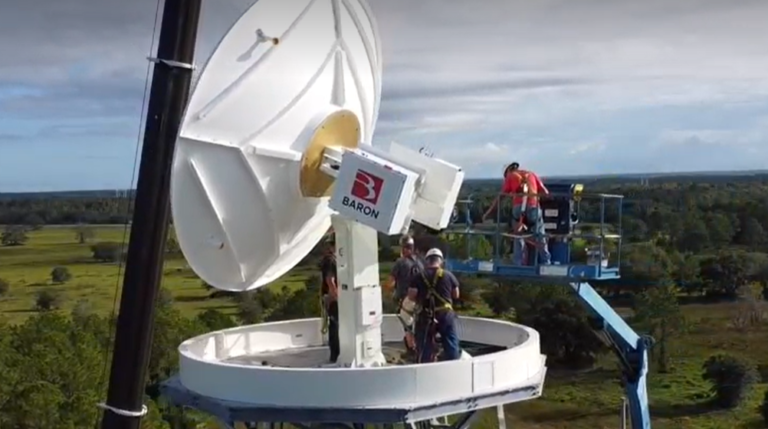
To address this, Baron Services developed automated calibration technology for the United States' NEXRAD radar network. Working alongside L-3 STRATIS, the company helped deliver the dual-polarization upgrade for 171 NEXRAD radars operated by the National Weather Service, the Federal Aviation Administration, and the Department of Defense.
Unlike traditional calibration methods that require manual checks, Baron’s system automatically monitors radar performance in real time. The technology continuously checks key components and makes adjustments when necessary, helping ensure the radar remains accurate throughout its operational life.
The benefit is straightforward: better data leads to better forecasts. Accurate radar measurements improve the ability to estimate rainfall, identify different types of precipitation, and detect severe weather conditions earlier and more reliably.
A study of 10 upgraded NEXRAD radar sites demonstrated that the calibration system maintained highly consistent performance over a two-week period. The results showed that the radars remained closely aligned with one another, ensuring that weather data collected across the network could be trusted and compared accurately.
The upgrades also support dual-polarization technology, which allows meteorologists to gather more detailed information about rain, snow, hail, and other weather phenomena. This added capability improves forecasting accuracy and helps weather agencies provide more timely warnings to the public.
While radar calibration may happen behind the scenes, its impact is significant. By keeping radar systems operating at peak accuracy, weather services can make better predictions, issue more reliable warnings, and ultimately help protect lives and property during severe weather events.